 FR
FR DE
DE IT
ITTibet Tours |
 |
|---|
| About Tibet | |||
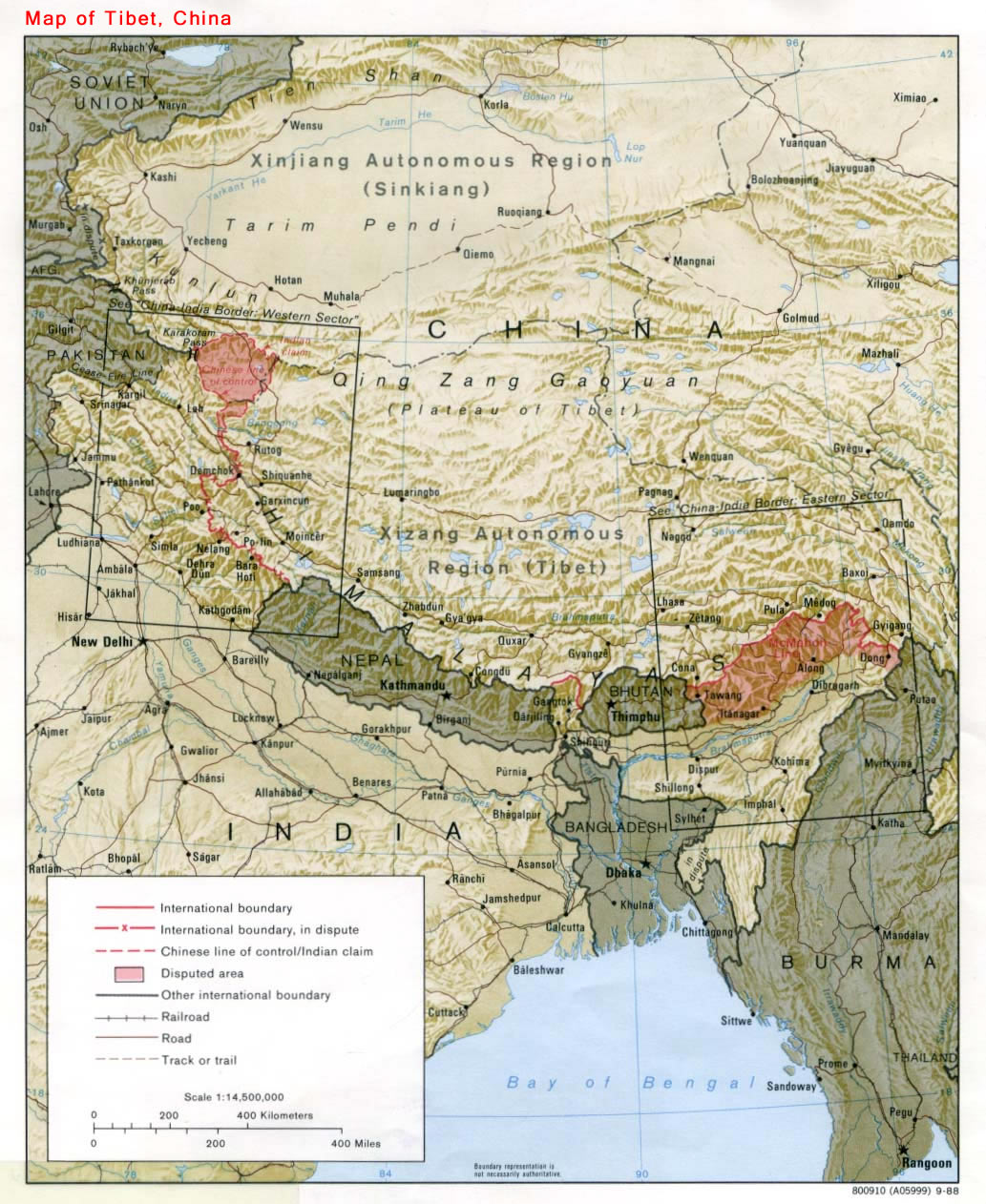
| "Tibet" refers to Tibet Autonomous Region of the People's republic of China. Under its jurisdiction are Lhasa City, six prefectures (Shigatse, Shannan, Nyingchi, Chamdo, Nagqu and Ngari) and 76 counties, spread over an area of 1.2 million square kilometers. Its borders are; the Jinsha River in the east, the Outer Himalaya Mountains in the south, the Karakorum Mountains and the Himalaya Mountains in the west, and the Kunlun Mountains, and the Tanggula Mountains in the north. In Tibet's early history this region was divided into four parts, namely, Wei, Zang, Ngari and Duomai (present-day Chamdo Prefectue). During the Tang Dynasty (618-907) Songtsan Gambo (?-650) established the Tubo Kingdom here. During the Yuan Dynasty (1271-1368), this region was called Tubot or Dbus-gTsang. In an imperial decree issued in 1663 by Emperor Kangxi of the Qing Dynasty (1644-1911) the "Panchen Hutuktu of Tibet" was mentioned. Snce then, the region has been called Tibet. Tibet, located on the Qinghai-Tibet Plateau, have been the venues where various ethnic groups intercourse, clash and blend. In addition to the Tibetans, there are other ethnic groups living there from generation to generation, including ancient ethnic minorities such as Xianbei, Huihu and Dangxiang, and the Mongols, Han, Hui, Salar, Qiang, and Naxi. They have worked hard to develop these areas. After the collapse of the Tubo Kingdom in the ninth century, these belonged to different local regimes, or were unified by the central government. After the founding of the Qing Dynasty in the 17th century, with support of the central government, the Gelupa Sect of Tibetan Buddhism ruled Tibet, but the former local government of Tibet headed by the Dalai Lama never had jurisdiction over the Tibetan areas outside of Tibet. It was after the founding of the People's Republic of China that the state instituted the system of regional ethnic autonomy, which gave rise to the establishment of autonomous regions, prefectures and counties. This not only guarantees the equal rights of the Tibetan people in various areas, but is also beneficial to the administration and economic and cultural development of various Tibetan autonomous area. |
|||
|
|||
|
|||
Copyright 2018 Trans Tibet Tours All right reserved